
Energy Performance Certificate (EPC) legislation is a critical pillar of the UK’s property market. For property owners and landlords, maintaining an up-to-date certificate is a legal mandate with significant financial implications for non-compliance.
As we move through 2026, the regulatory landscape has shifted toward stricter enforcement. This guide outlines the current legal framework and the mandatory deadlines confirmed in the 2026 Warm Homes Plan.
Accreditation Bodies: EPCs must be produced by an accredited Domestic Energy Assessor (DEA). Leading UK bodies include Elmhurst Energy, Stroma, and Quidos. You can locate a qualified professional through the official GOV.UK find an energy assessor service, which lists all current government-approved accreditation schemes.
An Energy Performance Certificate is a standardized document that acts as a “health check” for a property’s efficiency. It measures two primary factors:
Energy Efficiency: An estimate of how much it costs to run the property (heating, lighting, and hot water).
Environmental Impact: The property’s carbon dioxide (CO2) emissions.
During your survey, the property is graded on a scale from Band A (most efficient) to Band G (least efficient). This rating is determined by a qualified assessor who inspects the “fabric” of the building, such as insulation and glazing, alongside the mechanical systems like boilers and heat pumps.
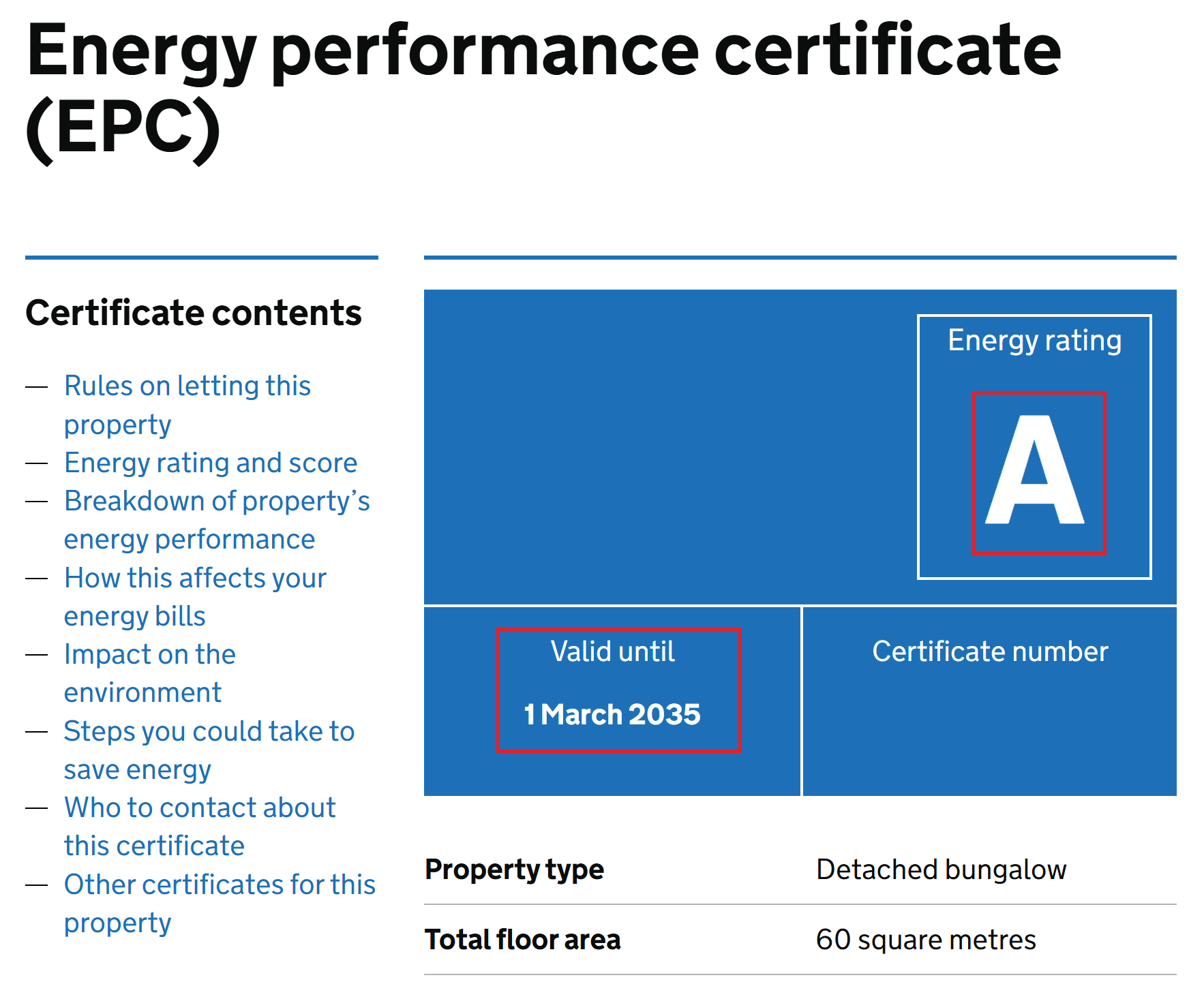
Every valid certificate provides three critical pieces of information for the owner:
In the UK, an EPC must be commissioned and made available in the following specific circumstances:
Verify Your Property: You can search the Official National Register to check your current rating and expiry date.
EPC requirements are triggered by specific events. Review the criteria for EPC exemptions to determine if your property qualifies for a legal waiver.
The MEES regulations define the minimum rating a property must achieve to be legally let. Following the January 2026 government update, the following rules apply: